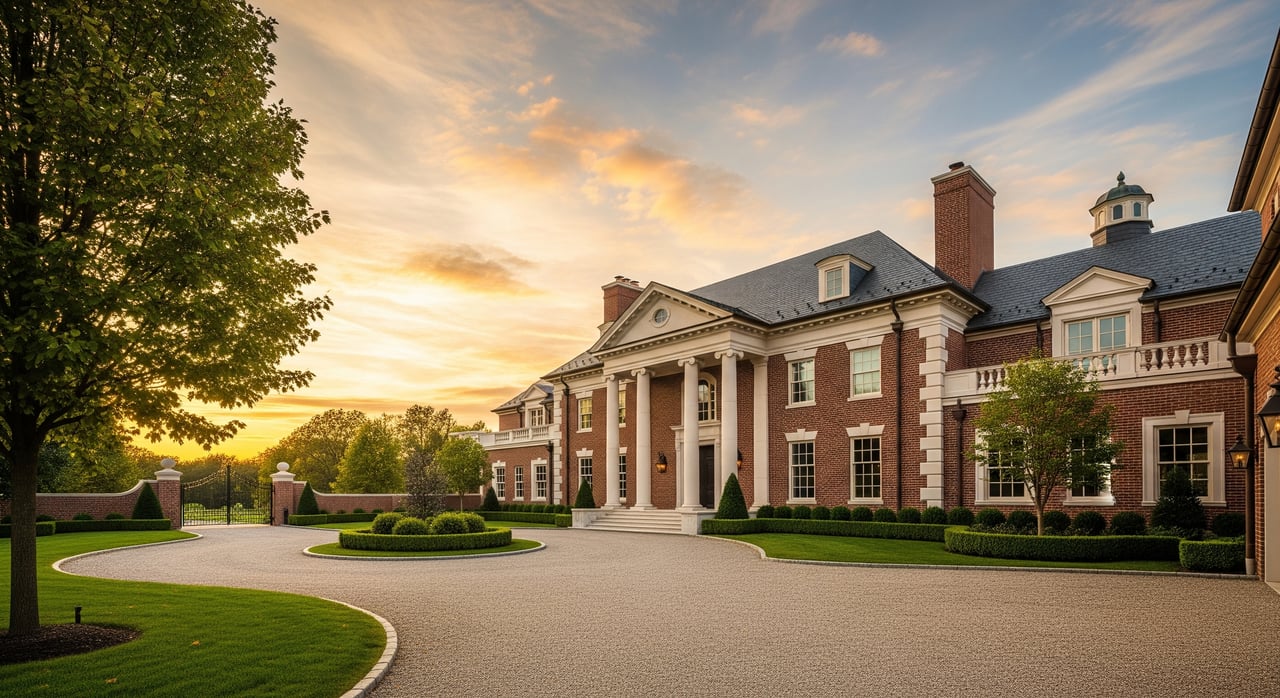
Are you wondering what your Bloomfield Hills estate is really worth today? Pricing a luxury home can feel uncertain, especially when no two properties are alike. You want a strategy that respects your home’s uniqueness and reaches the right buyers without leaving money on the table. In this guide, you’ll learn how to define the market, select the right comps, choose a pricing approach, and prepare your property so it commands attention and trust. Let’s dive in.
What “luxury” means locally
Luxury in Bloomfield Hills generally means the top 5–10 percent of local home values. These properties often include architect-designed homes, estate lots, lakefront settings, and high-end amenities like pools, guest houses, and mature landscaping. In this tier, price per square foot is less reliable because land, design pedigree, and unique features drive value.
Bloomfield Hills price drivers
Several factors consistently shape luxury pricing in Bloomfield Hills and nearby Oakland County communities:
- Proximity to cultural and educational anchors such as the Cranbrook Educational Community.
- School district reputation and access to private and public education options.
- Estate-scale lots with privacy, mature trees, and distinctive topography.
- Nearby luxury amenities, including private clubs, golf, and dining in neighboring Birmingham and Franklin.
Focus your analysis on micro-neighborhoods and specific settings, such as lakefront, private road enclaves, and streets with architecturally significant homes.
Pick the right comparables
The Sales Comparison Approach is primary for luxury pricing, but it requires careful selection and thoughtful adjustments. Aim for recent closed sales within 6 to 12 months. If inventory is limited, consider slightly older sales and widen your geographic search while documenting clear, defensible adjustments. Prioritize comps that match on lot size and privacy, water access or frontage, architectural pedigree, and the level of finishes.
When comp selection is difficult, add support:
- Commission a pre-list appraisal for credibility.
- Include a Broker’s Opinion of Value (BOV) that explains adjustments.
- Present a feature list and upgrade log to help buyers and appraisers understand value.
Valuation methods that work
- Sales Comparison Approach. Start here with a small set of strong comps and clear adjustments for land, view, age, condition, design, and amenities.
- Cost/Replacement Approach. Useful for unique custom builds or historic estates with few comps. Estimate land value plus replacement cost, then adjust for depreciation.
- Income Approach. Rare for single-family homes, unless there is a rental component.
Using more than one method increases confidence, especially for estates that do not mirror recent sales.
Smart pricing strategies
- Competitive pricing. List slightly below perceived market value to drive showings and potential multiple offers. This works when speed matters.
- Market-value pricing. Anchor near supported market value and allow time for the right buyer to surface through full marketing.
- Price band awareness. Know common search ranges and avoid pushing your listing into a higher band with small increases that shrink your audience.
Luxury buyers are selective. The market often penalizes big price swings, so aim to launch with a well-supported number to avoid future reductions.
Pre-list prep that boosts value
Strategic preparation can support your price and reduce negotiation friction:
- Staging and media. Use professional staging, high-end photography, video, drone, and twilight shoots.
- Inspections and repairs. Consider pre-list inspections to address issues before launch.
- High-impact updates. Focus on kitchen and primary suite appeal, smart-home features, outdoor living, and visible systems documentation.
- Documentation. Provide a detailed upgrades list, floor plans, service records, and permits.
Buyers in this segment expect polish and transparency. The stronger your materials, the more confident they feel in your price.
Taxes, zoning, and carrying costs
Carry costs and property rules influence buyer decisions and valuation:
- Confirm current taxable value, assessment history, and parcel details through county records.
- Review zoning, easements, conservation restrictions, or historic designations that affect use or future plans.
- Prepare estimates for utilities and maintenance typical of large estates, such as landscape care, snow removal, and security systems.
Clear documentation helps buyers compare your home to others and supports appraisals.
Bloomfield Hills features that command premiums
- Land and privacy. Estate parcels, wooded buffers, and long drives.
- Architecture and provenance. Notable architects and historic estates can earn a premium.
- Lifestyle amenities. Guest houses, pool complexes, equestrian facilities, lake frontage, and outdoor kitchens.
- Functional layout. Large square footage is not enough if the floor plan is awkward. Practical, updated layouts sell faster and stronger.
Demand patterns and timing
Luxury activity often rises in spring and early fall, though serious buyers transact year-round when a property fits their needs. Expect longer days on market than the mid-tier and fewer direct comps. Patience and consistent marketing are part of a successful strategy.
Metrics to gather before you price
Prepare a data-forward package that frames your price with evidence:
- Recent closed sales of similar high-end homes.
- Competing active listings and their days on market.
- Absorption rate for the local luxury segment to gauge leverage.
- List-to-sale price ratios and median days on market for top-tier homes.
- Price bands and search thresholds relevant to your list price.
- Land versus improvement value estimates, and replacement-cost context when needed.
This information helps you defend your price and make informed adjustments post-launch.
Managing risk and negotiations
Overpricing. This creates stale listings and later concessions. Launch with a supported number to protect your position.
Low-transaction risk. With fewer comps, appraisal gaps can happen. Be ready to share your valuation package.
Condition surprises. Large estates have complex systems. Pre-list inspections and clear disclosures reduce last-minute renegotiations.
Market sensitivity. Interest rates, employment trends, and stock market movement can influence luxury demand. Monitor conditions and adjust strategy if needed.
Your step-by-step pricing plan
- Define the luxury set. Pull recent sales and actives for the top 5–10 percent price tier in Bloomfield Hills and nearby micro-neighborhoods.
- Segment by setting. Separate lakefront, private roads, proximity to anchors like Cranbrook, and notable architectural pockets.
- Select 3–6 core comps. Document adjustments for lot, view, condition, design pedigree, and amenities.
- Validate your number. Order a BOV and consider a pre-list appraisal, especially for unique or historic properties.
- Prepare the property. Staging, professional media, inspections, and targeted updates that matter to luxury buyers.
- Choose your strategy. Decide on competitive, market, or aspirational pricing and align with your timeline.
- Launch with a package. Share a feature sheet, floor plans, upgrades log, and service records. Offer valuation context to buyers and agents.
- Review on cadence. Track showings, feedback, and competing inventory at 30/60/90 days and adjust if needed.
How an expert partner helps
Pricing and presenting a luxury home is part analytics, part storytelling, and part process management. If you are navigating a complex life event such as an estate, trust, divorce, or a senior move, a calm, structured guide can keep you on track. With boutique, high-touch service supported by luxury marketing channels, you can bring your home to market with confidence and clarity.
If you are ready to discuss a pricing strategy tailored to your property, schedule a conversation with Abby Kushner.
FAQs
What defines a luxury home in Bloomfield Hills?
- In this market, luxury typically means the top 5–10 percent of values, often featuring estate lots, design pedigree, lake frontage, and premium amenities; price per square foot is less decisive at this tier.
How do I choose comps for a unique estate?
- Prioritize recent closed sales with similar land, privacy, water features, architecture, and finishes; widen the radius and time frame if needed and document clear adjustments or add a pre-list appraisal.
Should I get a pre-list appraisal for my luxury home?
- Yes, it can validate your price, support negotiations, and help lenders and buyers understand value, especially when comparable sales are limited.
Which updates add the most value before listing?
- Focus on kitchen and primary suite appeal, outdoor living, smart-home features, and visible systems documentation; address repairs upfront to reduce objections.
How long do luxury homes take to sell in this area?
- Expect longer marketing periods than mid-market homes due to a smaller buyer pool; strong presentation, accurate pricing, and consistent outreach shorten timelines.